How Long Term Relations With Construction Cost Estimators Benefit Contractors
- by Mathew Johnson
- /
- on September 22, 2026
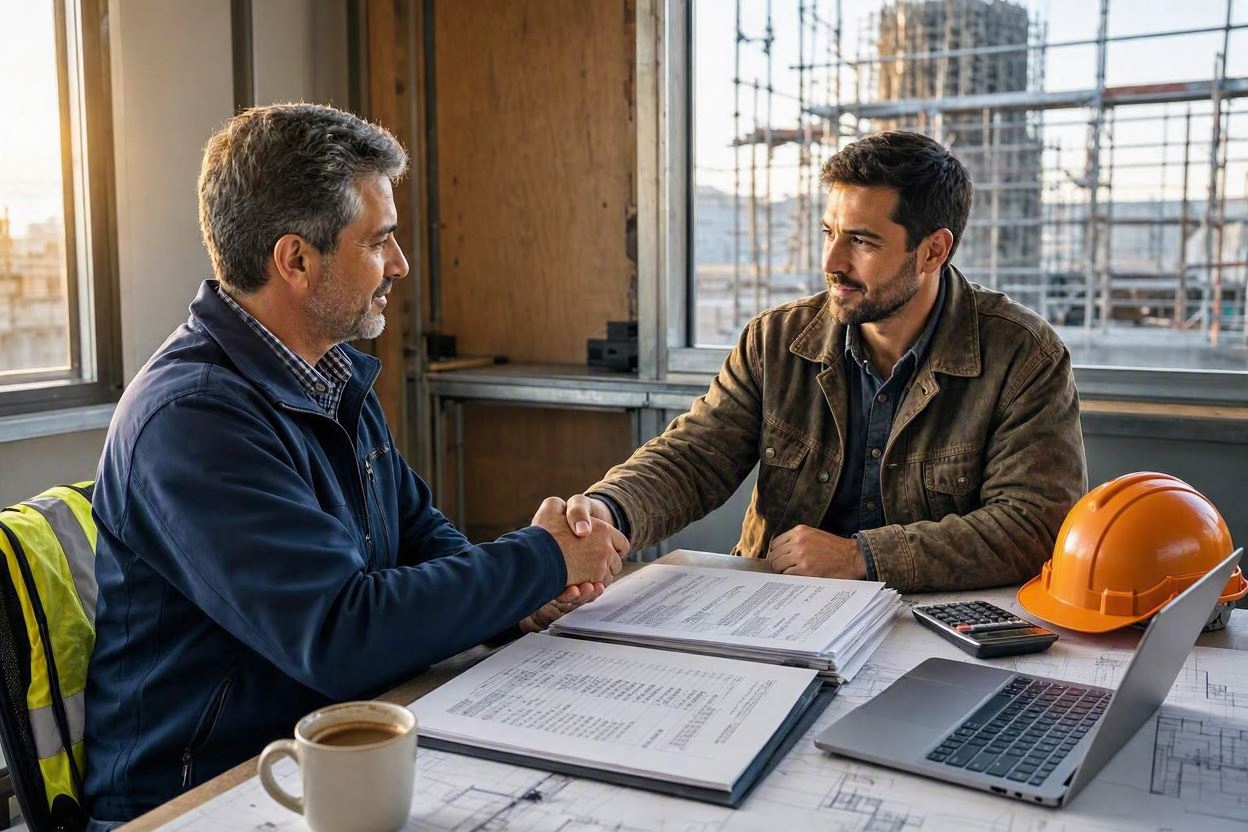
A long term construction estimator relationship means one trusted partner who knows your work and prices your bids again and again. It saves you time and helps your numbers stay steady.
Why does this matter so much? Bids move fast, and one shaky number can sink a job. A steady construction estimator learns your habits, your trades, and your goals. That trust pays off on every project.
A long term relationship is simple. You keep working with the same estimating partner instead of hunting for a new one each time.
Over time, they learn your trades, your regions, and your typical scopes. Your numbers get more consistent because the same brain shapes them. That consistency is the real prize!
Why consistency beats a one-off number
Here’s what most folks get wrong. They think one estimate is just one number.
But bidding is a habit, not a single event. When the same partner prices your work, they carry lessons from your past jobs forward. That memory is hard to buy from a stranger.
A good rule of thumb: consistency lowers surprises. Fewer surprises means fewer painful gaps between your bid and your final cost.
How estimates fit into your whole workflow
An estimate isn’t only a bid tool. It also guides your budget once work begins.
One respected construction guide explains that a contractor’s bid estimate usually becomes the budget estimate. You use it to control spending and plan financing. So a sloppy bid hurts you twice.
That’s why a partner who understands your flow matters. They shape numbers you can actually manage later.
Why trust grows over time
Trust isn’t instant. It builds as your partner sees your projects succeed or stumble.
Each round, they ask sharper questions. They flag risky spots before they cost you money. A short summary: the longer you work together, the fewer blind spots you carry into a bid.
How the Relationship Works in Practice
So how does this actually run day to day? The steps are clear, and they get smoother with repetition.
According to the site, you send drawings, specs, or scope. Construction estimator reviews the plans and returns a quote. The home page says that quote can come within minutes, while the pricing FAQ says within 24 hours.
Most estimates are delivered within 24 to 48 hours, according to the site. Files can arrive in Excel or PDF, using their template or yours.
The simple back-and-forth flow
The rhythm is easy to follow:
You share plans and scope.
Your partner sends a quote and turnaround.
You approve, and the takeoff work begins.
The site says a 50% deposit starts the work, with the balance due on delivery. Payment options listed include cards, ACH, wire, and PayPal. Repeat clients may qualify for volume pricing or invoicing terms, according to the site.
Here’s why this really matters. A known flow removes friction. You stop re-explaining your basics every single time.
What drives the numbers step by step
Numbers come from real cost data, not guesses. A construction takeoff counts every material and labor item in your plans.
Then those counts meet current prices for your area. Costs vary by state, city, and year, so location shapes the total. Wages shift too, which changes labor lines fast.
One expert habit helps here. Ask your partner to separate risky assumptions from firm quantities. That clarity makes revisions quick.
Planning early to avoid costly changes
A U.S. DOT report from January 2025 makes one point loud and clear. Good delivery starts long before construction begins.
Rushed planning, design, or estimating can trigger change orders later. Early involvement, strong communication, and documented processes help prevent them. A long-term estimator gives you that early eye on every bid.
Mini-summary: the earlier your partner joins, the fewer expensive surprises hit mid-job.
A Worked Example and the Lesson Behind It
Numbers make this real, so let’s walk through one together. This is a simple math demo, not a bid price.
Example: turning a wage into weekly labor cost
Let’s use public wage data from the Bureau of Labor Statistics.
In July 2026, production and nonsupervisory workers in construction earned an average of $39.25 per hour.
Their average workweek was 40.1 hours.
Now multiply: $39.25 × 40.1 = about $1,574.93 per week, per worker.
That’s roughly $1,575 in base wages for one week. Feels tidy, right? But hold on.
This number leaves out a lot. It skips payroll taxes, benefits, and insurance. It ignores supervision, small tools, overtime, and profit. So it is not a bid price, and it never should be treated like one.
Here’s the lesson. A raw wage looks simple, yet a real estimate carries many hidden layers. A steady partner knows which layers your jobs need.
Why contingencies protect your bottom line
Smart estimates also plan for the unknown. A public project manual from the City of Los Angeles explains two different buffers.
Estimating contingency covers gaps in your line items. Budget contingency covers change orders during construction. They are not the same, and mixing them causes trouble.
That manual suggests a budget contingency near 10% for projects over $1 million. Smaller or very complex jobs often use around 20%. A partner who knows your work sets these buffers wisely.
Why prices must be tuned to time and place
Costs don’t sit still, and old data can fool you. One well-known construction resource warns that historical costs must be used carefully.
For example: The Los Angeles manual shows why with a clear demo. It escalates a $12,000,000 estimate by 5.5% to reach $12,660,000. About 5% per year is described there as a common escalation pace.
So a good estimate reaches toward the future, not the past. Your long-term partner tracks these shifts for your region.
Common Mistakes, DIY Limits, and When to Get Help
Let’s talk about the traps that quietly drain your profit. Knowing them helps you dodge them.
Common mistakes contractors make
The biggest mistake is treating every bid as a fresh start. You lose all the memory from past jobs.
Another common slip is skipping contingencies. Change orders then eat your margin. The DOT report links rushed estimating to exactly these costly changes.
What to do instead? Keep one partner, plan early, and separate firm numbers from risky guesses. That habit alone prevents many painful gaps.
When doing it yourself is just fine
Honestly, you don’t always need help. For very small, simple jobs with clear drawings and enough time, a careful DIY estimate can work well.
If you know the trade cold and the scope is tiny, go for it. Just double-check your quantities and your prices. And remember, this article is general information, not legal or financial advice.
Wrapping It Up
Long-term estimating relationships pay off in quiet, steady ways. When one estimator knows your work, your numbers stay consistent from bid to bid. That memory helps them spot risks early and split firm quantities from shaky guesses.
Fewer surprises means less rework once a job begins. It also gives you calmer planning, since your buffers and prices reflect your real projects. Over time, bidding feels less like a scramble and more like a routine you trust.
The main takeaway is simple. Stick with an estimator who learns your habits, involve them early, and let that shared history sharpen every future bid.
FAQs
Does Using the Same Estimator for Every Project Really Make a Difference?
Yes, it usually does. The biggest gain is consistency. When one estimator handles your projects, they already know your scope, your trades, and how you like to work. You spend less time explaining the basics each round.
When Can I Estimate In-House, and When Should I Get Outside Help?
It depends on the job. Small, simple projects are often fine to handle yourself. If the drawings are clear, the scope is tight, and you have enough time, an in-house estimate can work well.
Should My Estimate Include Contingency, and What Do People Get Wrong?
Usually, yes. Adding some contingency is a smart move. Drawings change, site conditions surprise you, timing shifts, and prices move. A little cushion keeps those bumps from wrecking your numbers.
Share Post :
New Posts
-
 AI vs Human Construction Cost Estimators: What Software Does Well and Where Local Knowledge Still Wins in Texas and California09 Oct 2026
-
 Why Accurate Construction Estimating Matters for Phoenix Projects24 Sep 2026
-
 How Long Term Relations With Construction Cost Estimators Benefit Contractors22 Sep 2026
-
 How Much Does It Cost to Build a Home in the USA18 Sep 2026