Why Accurate Construction Estimating Matters for Phoenix Projects
- by Hava Ardana
- /
- on September 24, 2026
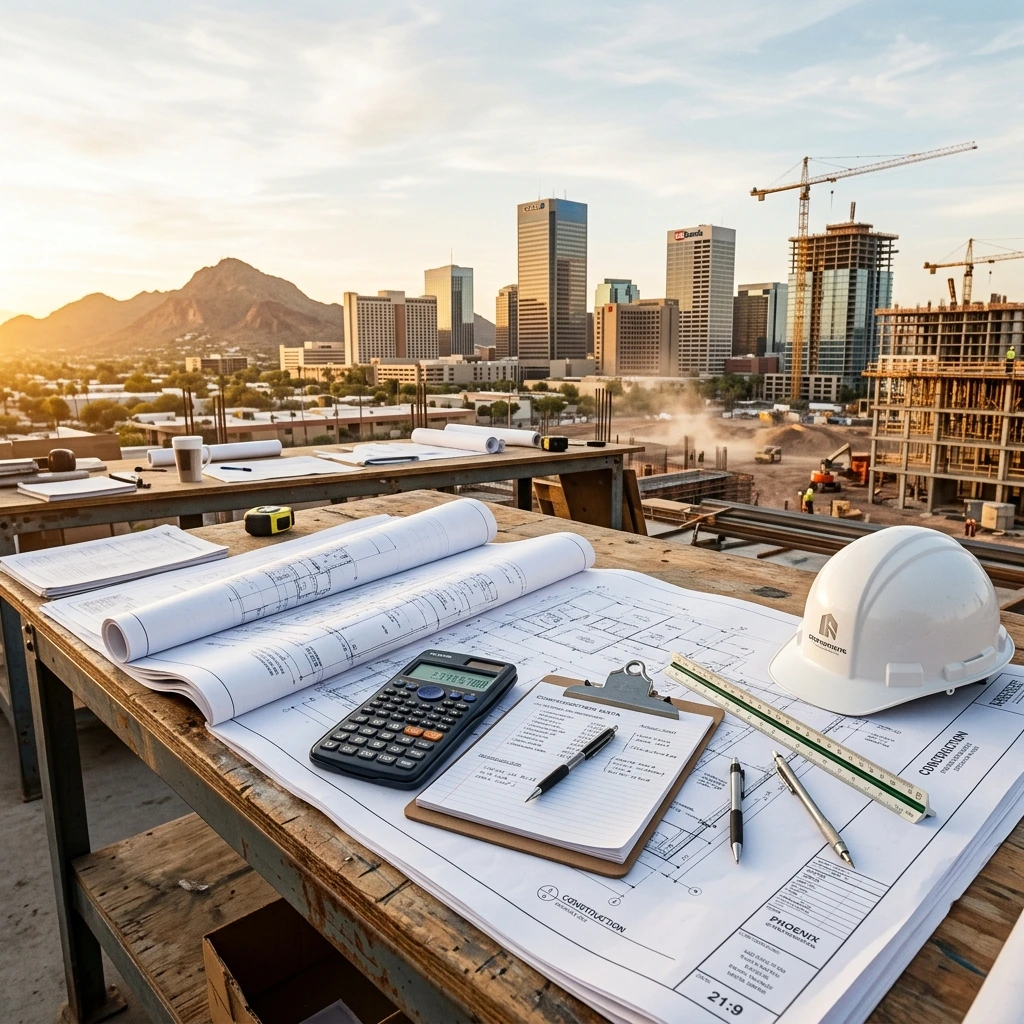
Accurate construction estimating means pricing every phase of your Phoenix project before you break ground. It uses real material, labor, and code costs, not guesses.
Skip this step, and even small jobs can blow past budget fast. Phoenix adds its own twists, too. Triple-digit heat, strict worker safety rules, and a tight labor market all push your numbers around. Get the estimate wrong, and you’ll feel it in your wallet and your timeline.
What Does Construction Estimating Actually Cover?
What Counts as a Cost Estimate?
A cost estimate isn’t a guess dressed up in a spreadsheet. It’s a detailed forecast of materials, labor, permits, equipment, and overhead for your project. Good estimates break costs down by phase, so you know where your money goes.
The Government Accountability Office studied this closely. Its Cost Estimating and Assessment Guide (GAO-20-195G, published March 12, 2020) lays out four traits every high-quality estimate needs: it must be credible, well-documented, accurate, and comprehensive. Miss any one of these, and the whole number becomes shaky.
Why This Matters More in Phoenix
Phoenix has its own cost pressures. Extreme heat slows crews and adds safety requirements. Permit timelines shift with each project type. A construction estimator working outside Arizona won’t automatically know these local factors.
Here’s a rule of thumb from the field: any estimate that doesn’t account for regional labor rates and climate-driven work rules is already out of date before the ink dries.
Why Poor Estimates Cost More Than You Think
The GAO’s earlier findings (GAO-10-199) showed that weak estimates are a leading cause of major cost overruns on public projects. The same pattern shows up on private jobs, just with smaller headlines. A shaky estimate doesn’t just underprice your project. It hides risks you’ll only discover mid-build, when fixing them costs the most.
What Drives the Numbers in a Construction Estimate?
The Core Cost Inputs
Every estimate starts with a few core inputs: materials, labor, permits, equipment rental, and overhead. Materials shift with market prices. Labor shifts with local wage data. Permits depend on your city and project scope. Miss one input, and your total drifts away from reality.
University of Arizona’s CE 583 course outlines this process well. It covers quantity take-off, budget estimates, pre-construction services, subcontractor pricing, and bid preparation as distinct steps. Each step catches errors the last one might have missed.
How Labor Costs Get Calculated
Labor is often the biggest swing factor. According to the Bureau of Labor Statistics (May 2025), construction and extraction occupations make up 5.6% of Phoenix-area employment, with a mean hourly wage of $29.42. A construction cost estimator uses figures like these, paired with local project data, to build realistic labor line items instead of national averages that don’t fit Arizona.
Local Factors That Shift Phoenix Numbers
Phoenix heat isn’t just uncomfortable. It’s regulated. OSHA requires heat illness prevention planning for outdoor work, and the City of Phoenix Worker Safety Ordinance requires written heat safety plans for outdoor workers on city contracts. These plans affect scheduling, crew size, and hydration breaks, all of which show up in your labor costs. Permit activity also matters here. The U.S. Census Building Permits Survey tracks this data annually, with 2025 figures set for release on May 14, 2026, giving estimators a broader view of building trends across the region.
Example: Pricing a Small Phoenix Remodel
The Project Scenario
Let’s walk through a simple example. Say you’re pricing a 400-square-foot home addition in Phoenix. You’ll need framing, electrical, and finish labor, plus materials and permit fees.
The Math, Step by Step
Assume your crew needs 200 labor hours total. Using the BLS mean hourly wage of $29.42 for Phoenix construction and extraction workers:
200 hours × $29.42 = $5,884 in base labor cost
Add materials at roughly $18,000 for a project this size
Add permit and inspection fees, estimated at $1,200
Rough total: $25,084 before overhead and contingency
What This Math Leaves Out
This example uses only wage data and rough material costs. It doesn’t include weather delays, change orders, equipment rental, or the extra time heat safety breaks can add to your schedule. That’s exactly why a written estimate needs contingency built in. A number without a buffer isn’t a plan. It’s a hope.
Common Mistakes, and When to Get Estimating Help
Mistakes That Blow Up Budgets
The most common mistake is pricing labor using national averages instead of local wage data. Another is skipping permit research until after the estimate is done. A third is treating an early rough estimate as a final number and building your budget around it.
Here’s what most people get wrong: they assume estimating is a one-time task. In reality, estimates should get more detailed as your project moves from concept to bid.
When Doing It Yourself Is Fine
If you’re a homeowner planning a small, well-defined project with a fixed scope, building your own rough estimate is fine as a starting point. It helps you set expectations before you talk to contractors.
Frequently Asked Questions
How much does a professional construction estimate cost?
Pricing varies by scope, but services like Build AI Estimating average around $200 per estimate, according to the company’s site.
How long does it take to get a construction estimate?
Build AI Estimating says it delivers estimates within 24 to 48 hours after you send your plans.
Can I estimate my own construction project?
Yes, for small, well-defined projects. It’s a good way to set a starting budget before talking to contractors.
Why does Phoenix heat affect construction costs?
OSHA heat planning rules and the City of Phoenix Worker Safety Ordinance both require written heat safety plans for outdoor workers, which can affect scheduling and labor costs.
What makes a construction estimate high quality?
According to the GAO’s Cost Estimating and Assessment Guide, a high-quality estimate must be credible, well-documented, accurate, and comprehensive.
Share Post :
New Posts
-
 AI vs Human Construction Cost Estimators: What Software Does Well and Where Local Knowledge Still Wins in Texas and California09 Oct 2026
-
 Why Accurate Construction Estimating Matters for Phoenix Projects24 Sep 2026
-
 How Long Term Relations With Construction Cost Estimators Benefit Contractors22 Sep 2026
-
 How Much Does It Cost to Build a Home in the USA18 Sep 2026